Does Invisalign Affect Your Voice on a Voice-Recognition System?
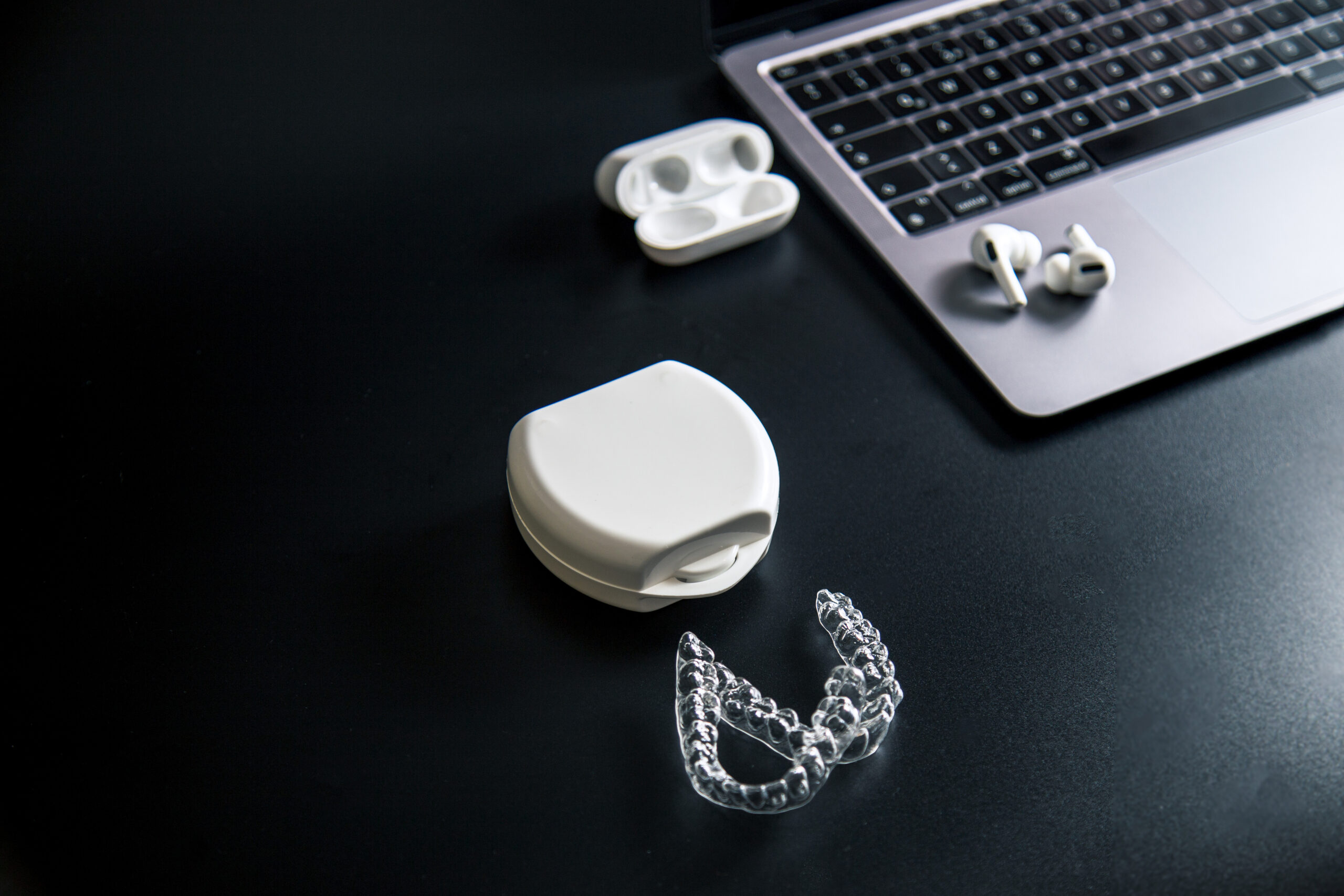
Invisalign may cause a slight, temporary lisp during the first few days that can briefly reduce voice-recognition accuracy. Still, most speakers adapt within about a week, and both their pronunciation and the software normalize.
- 1. Any speech change from clear aligners is usually mild and short-lived, fading within days to a week.
- 2. The s, sh, and th sounds are the ones most likely to shift at first, which can nudge voice-assistant accuracy early on.
- 3. Reading aloud daily and re-training your voice assistant helps both you and the software adjust faster.
- 4. Wear the trays 24 hours a day, removing them only to brush, floss, and clean the trays.
- 5. Treatment at Bagnall Family Dentistry needs fewer visits, keeping busy schedules on track.
Quick Answer: Does Invisalign Affect Your Voice on a Voice-Recognition System?
Yes, but only slightly and only for a short time. When you first place clear aligners, a subtle lisp can appear on certain sounds, and that faint change may cause a voice-recognition system to misread a word or two during your first days. As your tongue adapts, your pronunciation returns to normal and the software follows along.
The short answer for busy readers
Most people who dictate emails, use a smart speaker, or rely on voice commands notice little to no lasting disruption. Any early wobble in accuracy tends to disappear within a few days as speech settles. If you use dictation heavily for work, the first week is the period to watch, and simple practice smooths it out quickly.
Why any effect is usually temporary
The mouth learns fast. Your tongue quickly relearns how to reach the roof of your mouth and your teeth around a thin plastic surface. Because the trays are smooth and low-profile, they present a small obstacle that the brain adjusts to almost automatically, which is why clear aligners rarely create a permanent voice change.
How Invisalign Aligners Interact With Speech
Clear aligners affect speech by adding a thin layer over your teeth that briefly alters how your tongue contacts them. Speech is a precise dance between the tongue, teeth, lips, and palate, so even a small addition can shift a few sounds until your muscle memory catches up.
What the aligners do inside your mouth
The trays cover the front and back surfaces of your teeth with a snug, transparent shell. Your tongue, used to touching bare enamel, now meets a slightly different texture and thickness. This is the main reason a temporary lisp can appear, and it is a normal, expected part of settling in with removable clear trays.
Sounds most affected: s, sh, and th
Sibilant and interdental sounds are the usual culprits. The letters s, sh, and th require your tongue to sit close to your upper teeth, so the added surface can produce a soft whistle or slur at first. These sounds are also the ones voice-recognition tools parse most carefully, which is why early accuracy dips center on them.
The typical adjustment timeline
Days 1 to 3
A faint lisp may be noticeable to you, though others rarely detect it. Speech feels slightly unfamiliar.
Days 4 to 7
Your tongue recalibrates, and most sounds normalize. Casual conversation feels comfortable again.
Beyond week one
Speech is typically indistinguishable from your natural voice, and each new tray in the series feels routine.
What the Research Says About Invisalign and Speech
Research confirms that speech effects from clear aligners are real but temporary. Controlled studies tracking adult patients found measurable articulation changes at insertion that resolved as wear continued, matching what patients report in daily life.
Findings from prospective clinical studies
A prospective clinical study on adults undergoing clear aligner treatment documented an initial impact on speech performance that improved over the treatment period, showing the effect is transient rather than fixed. You can review the prospective clinical study on speech performance for the detailed measurements. A separate analysis of articulation reached a similar conclusion, reporting that speech was affected mainly at first and then recovered, as summarized in this study on effects on speech articulation.
How quickly speech normalizes for most patients
The consistent theme across the evidence is fast adaptation. Any early shift in sibilant sounds tends to fade within days to a couple of weeks, and by the end of a wear cycle most speakers show no meaningful difference. That pattern lines up with how the trays achieve controlled tooth movement over time, discussed in this systematic review of accuracy of dental movements.
Voice-Recognition Systems: Why They May Struggle at First
Voice-recognition systems can briefly struggle because they map the exact acoustic pattern of your speech, so a small early lisp may nudge their accuracy. The good news is that modern systems and your own speech both adapt, so the dip is short.
How speech-recognition technology parses your voice
Speech-recognition tools break your voice into tiny sound units and match them against learned patterns to predict words. When a sound like s or th arrives with a slightly different acoustic signature, the software has to work harder to identify it. Accuracy has long been a central measure of how well these tools perform, as explored in this analysis of speech-recognition technology in healthcare.
Slight lisps and word-error rates during week one
During the first week, a mild lisp can raise the chance of a misread word here and there, especially in commands packed with sibilants. This is most likely to show up when you dictate long passages or use hands-free voice commands in a noisy space. For most users, the effect is minor and easy to correct on the fly.
Why the software usually adapts along with you
Many voice assistants continue learning your speech patterns over time, so as your pronunciation stabilizes, the recognition engine tracks the change. In practice, your tongue adjusting and the software refining its model happen in parallel, which is why the early rough edges smooth out within days.
A note from Dr. Matthew Bagnall
"In my experience, patients worry far more about speech than they need to. Within a few days, the tongue simply relearns its path, and by the time most people finish their first tray, they have forgotten there was ever an adjustment."
Practical Tips to Speak Clearly With Invisalign
You can speed up clear speech by practicing intentionally during the first week. A little daily effort helps your mouth adapt and keeps your voice assistant reading you accurately.
Practice reading aloud daily
Reading aloud for a few minutes each day gives your tongue focused reps on the tricky sounds. Choose passages heavy in s, sh, and th words, and slow down slightly at first. This deliberate practice retrains muscle memory faster than waiting passively for the feeling to pass.
Retrain your voice assistant if needed.
If a voice assistant keeps misreading you in week one, run its voice-training feature again so it captures your current speech pattern. Speaking a little more deliberately during commands also reduces errors. Once your pronunciation settles, you can return to your normal pace.
- 1. Short daily reading-aloud sessions
- 2. Slightly slower, deliberate speech during week one
- 3. Voice-assistant re-training when accuracy dips
- 4. Sips of water to keep your mouth comfortable
- 1. Removing trays just because speaking feels new
- 2. Rushing sibilant-heavy commands early on
- 3. Assuming a mild lisp is permanent
- 4. Skipping practice and hoping it resolves alone
When to expect full clarity
Most people speak naturally again within a week, and each subsequent tray feels easier than the last. If a noticeable lisp lingers well beyond that, a quick check of tray fit can help. Learn more through our guide on Invisalign success: all you need to know.
Wearing Your Aligners Correctly for Best Results
Consistency matters more than complexity when it comes to clear aligners. A few simple daily habits make a noticeable difference in how smoothly treatment progresses and how quickly your speech settles.
Wear the trays 24 hours a day.
Wear the trays all the time, 24 hours a day. Keep them in for eating and drinking anything, except turmeric, yellow mustard, and mac & cheese, which can stain the plastic. Take them out only to brush and floss your teeth, and to brush your trays. This near-constant wear keeps treatment on schedule and gives your tongue steady practice, which shortens the speech-adjustment window.
Eating, drinking, and the turmeric, mustard, and mac & cheese rule
Because you keep the trays in while eating and drinking, only a few strongly pigmented foods call for removal. Turmeric, yellow mustard, and mac & cheese are the notable exceptions, since their pigments can discolor clear plastic. Everything else stays on the menu while you wear your trays.
Removing trays only to brush and floss
The only routine reason to remove the trays is oral hygiene. Brush and floss your teeth, then brush the trays themselves before placing them back. This keeps both your teeth and the plastic clean and clear.
Invisalign routine guidance from Dr. Bagnall
The treatment works best when it becomes second nature rather than a chore. Setting reminders during the first few weeks helps until wearing the trays feels automatic, much like remembering to buckle a seatbelt. For anyone balancing a demanding career or a busy family schedule, this kind of steady, clear aligner support offers reassurance that the process will not derail the week. Explore your options on our Invisalign page.
Why Choose Invisalign at Bagnall Family Dentistry
Our treatment requires fewer visits to our office, making Invisalign at Bagnall Family Dentistry more convenient and faster. That streamlined approach is a real advantage for professionals, parents, and frequent travelers who cannot spare hours in a waiting room.
Fewer visits, more convenience, faster treatment
You will only need to come in a few times at the beginning, and then we see you at the end for your retainers. That efficiency means less disruption to your calendar without sacrificing careful oversight. See how removable trays fit modern smile plans in our article on why Invisalign is part of more smile makeovers, and view our Invisalign pricing when you are ready to plan.
Local care in Andover, MA
As a family practice serving patients of all ages, we build lasting relationships and treat every visit with a relaxed, personal touch. Learn about our story on the About Us page, browse our full range of services, or contact our Andover office at 978-655-2005 to get started. You can also find driving directions to our practice.
Find us
Map/directions: https://maps.app.goo.gl/PpSZCD2zov5qXzPB6?output=embed
Meet Dr. Matthew Bagnall
A native of Andover, Dr. Matthew Bagnall is a second-generation dentist continuing the strong family tradition his parents began nearly 40 years ago. After graduating from UConn Dental School and completing a two-year residency at LSU Dental School in New Orleans, he returned home to join the practice his parents founded. Today, as the owner of Bagnall Family Dentistry, he combines decades of family experience with modern technology, earning recognition that includes Boston Magazine's Top Dentist award and Andover's Best Dentist honors.
Frequently asked questions
Clear aligners can create a mild, temporary lisp on sounds like s, sh, and th during the first days of wear, but they do not permanently change your voice. As your tongue adapts to the thin plastic surface, your normal pronunciation returns, usually within about a week. Reading aloud daily during that first week helps your speech settle faster.
The most common early complaint is the brief adjustment period, which can include a slight lisp and the feeling of something new on the teeth. Some people also find remembering to keep the trays in takes discipline at first. Both concerns fade quickly. Wearing the trays 24 hours a day, removing them only to brush and floss, keeps treatment on track and shortens that settling-in phase.
People sometimes struggle when they do not wear the trays consistently, which slows progress and can feel discouraging. Others simply need help building the habit early on. That is why setting reminders during the first few weeks matters until wearing the trays becomes automatic. With steady wear and fewer office visits at Bagnall Family Dentistry, most patients stay comfortably on course through the full plan.
An Invisalign lisp usually lasts only a few days and rarely more than a week for most speakers. The s, sh, and th sounds are affected first because they rely on close tongue-to-teeth contact. Daily reading practice speeds recovery. Clinical studies confirm that any early articulation change tends to resolve as wear continues, so it is a short-term stage rather than a lasting effect.
It might occasionally during your first week, because a faint lisp can alter the acoustic pattern the software matches against. This mostly shows up in sibilant-heavy commands or long dictation. The dip is usually small and brief. Retraining your voice assistant and speaking a little more deliberately at first helps, and as your pronunciation stabilizes, the recognition accuracy returns to normal alongside it.